This week, we discussed the applications and implications of Generative AI. Initial discussion surrounded the notion that information provided by GenAI may not always be reliable, and the consequences of neglecting to fact-check generated information or examine references GenAI has chosen may be severe when one is using this information in a career or professional space. From a student perspective, we discussed that GenAI is now becoming a quick go-to resource for studying, completing assignments, writing papers, and creating projects. We discussed certain assignments, such as standard five-paragraph essays, reading summaries, worksheets, multiple choice open-book quizzes, lab reports, or biography reports are easily deciphered by GenAI and have high potential to generate quality output. Other forms of assignments, such as personal reflections, specific analyses, presentations, creative writing or project work, interviews, collaborative work, or any oral or in-class work are more difficult for students to run through GenAI and receive quality output. Final discussion surrounded the ethical issues surrounding the use of AI; data privacy, cultural and geographical biases, generational access, critical thinking skill development, and environmental impacts are all serious issues concerning the rising uses of GenAI.
Major Limitations of AI
One of the major limitations of AI include lack of reliability. As educators using GenAI to assist or generate lesson plans, our role becomes quite comprehensive in verifying validity of claims, references, and the material produced. This process can be time consuming, and to some surpasses the point of bothering to use AI in the first place. Using GenAI to create teaching tools offers a wide variety of exciting opportunities but also requires a commitment to verifying work and personalizing lessons plans before teaching. In addition to potential misinformation, generating lessons strictly using AI has been shown to offer low engagement instruction and activities, and neglected to include diverse perspectives and people (Trust et al, 2025). Additionally, there remains the issue of data privacy, as recent studies have revealed storage of personal information, including student numbers, health data, passwords, or social security information is often an issue when GenAI tools are used without discretion (National Education Association, 2025).
How well does GenAI do with Secondary Science?
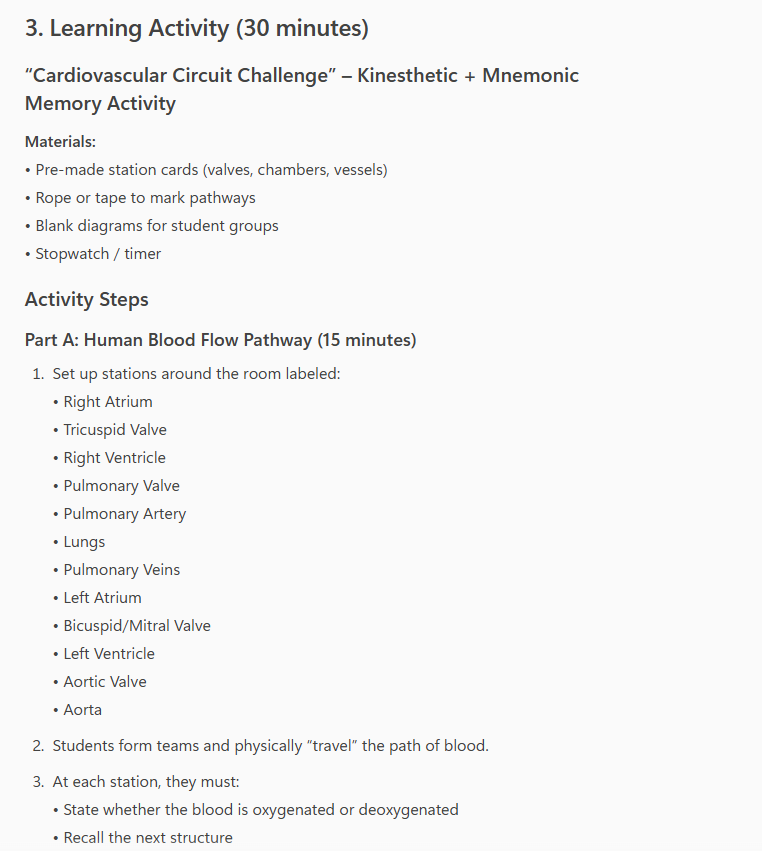
To explore potential uses for GenAI in my teaching area, I asked Microsoft CoPilot to do some analysis and content generation for Anatomy and Physiology 12. Focusing on the cardiovascular systems unit, I entered the following prompt: “Please generate a lesson plan for a 1hr lesson about the cardiovascular system including a 30min activity to help Canadian Anatomy and Physiology 12 students remember what they learned in the instruction portion of this lesson”.
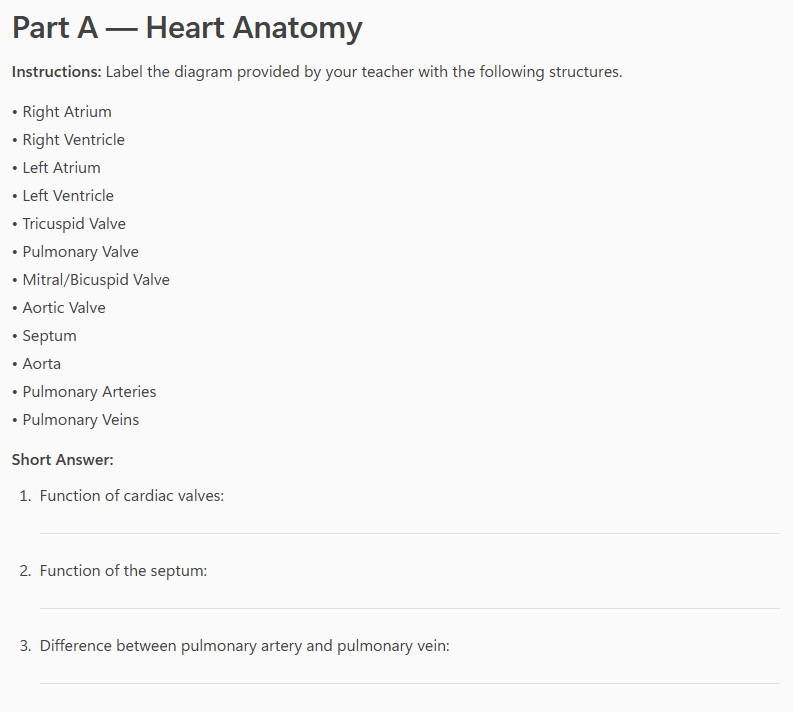
CoPilot presented me with 25min of direct instruction outlining anatomy, blood flow, and types of blood vessels, and purpose of the cardiovascular system. Next, was a learning activity outlining pre-made station cards, with which students would build a physical pathway on the floor and “walk” the path of a red blood cell through the heart. Finally, a diagram labelling activity was suggested to conclude the class. I also asked CoPilot to generate a worksheet for this content, that I would be able to handout to students.
Overall, I think the skeleton of this lesson plan isn’t horrible. A short lesson followed by 35min of interactive learning is a solid start. The learning activities include elements of kinesthetic and visual learning, which I like, and includes a good amount of key vocabulary. There was no evident misinformation.
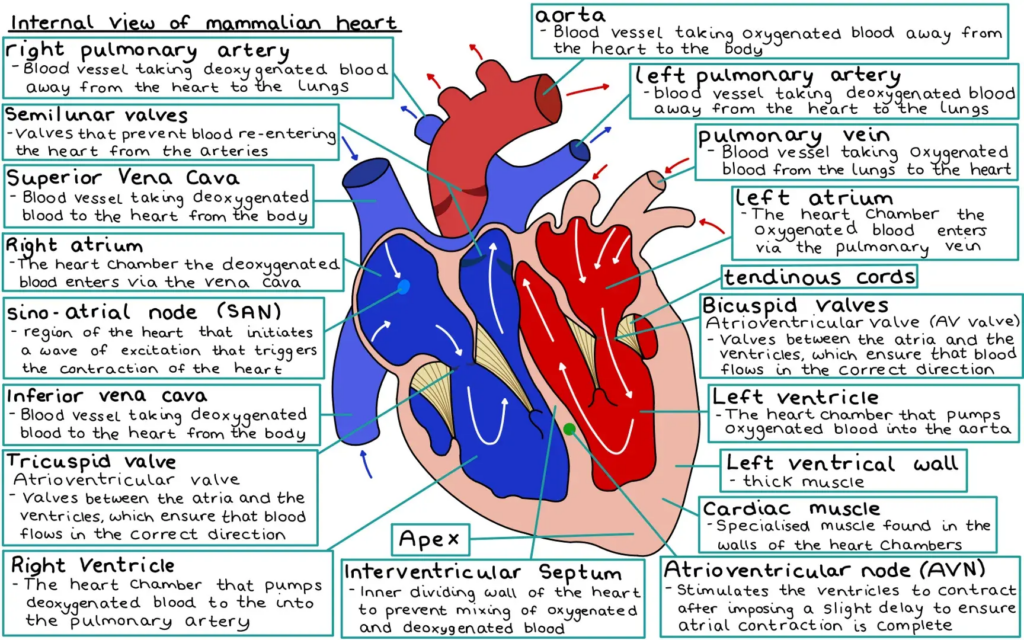
However, what was very apparent to me that was lacking from this lesson – depth, critical thinking, and visuals. Learning cardiovascular anatomy requires a solid understanding of where structures are, not simply their names. Further, the anatomical structures CoPilot listed, though correct, left out key players such as papillary muscles, atrioventricular bundle, SA and AV nodes, as well as carotid, brachial, and subclavian arteries, and R/L directionality applied when labelling. Without a strong visual component to this lesson (not provided by AI), students would be left royally confused about where each of these structures are located, which also affects their ability to understand their function. The questions posed in the worksheet did not comprehensively grasp upper level Bloom’s Taxonomy style questions, inquiring only about explicit function or differences. Questions such as “IF the atrioventricular valve was defective, WHAT would the IMPACT on blood flow be?” offer an element of critical thinking and require an understanding of anatomical structure and function.
A diagram such as the one below, depicts more depth and appropriately labelled structures. Overall, I think that GenAI offered a solid foundation for building a cardiovascular system lesson, lacking primarily in depth, critical thinking questions, and visual aids.
All images were generated using individual screenshots of Microsoft CoPilot, or provided publicly from Knowunity.
References
National Education Association. (2025). Student and Educator Data Privacy | NEA. Nea.org. https://www.nea.org/professional-excellence/student-engagement/tools-tips/student-and-educator-data-privacy
Trust, T., Maloy, R., Xu, C., & Pelletier, K. (2025). Civic education in the age of AI:
Should we trust AI-generated lesson plans? Contemporary Issues in Technology
and Teacher Education, 25(3), 418-442.