Reflection 7: Coding, Computation and Gaming
This week, we discussed the importance and application of coding and computation in the classroom as it relates to problem solving and student development. Further, we looked at the use of games and gameplay in the classroom and their impacts on traditionally ‘boring’ subjects.
Coding and Computation
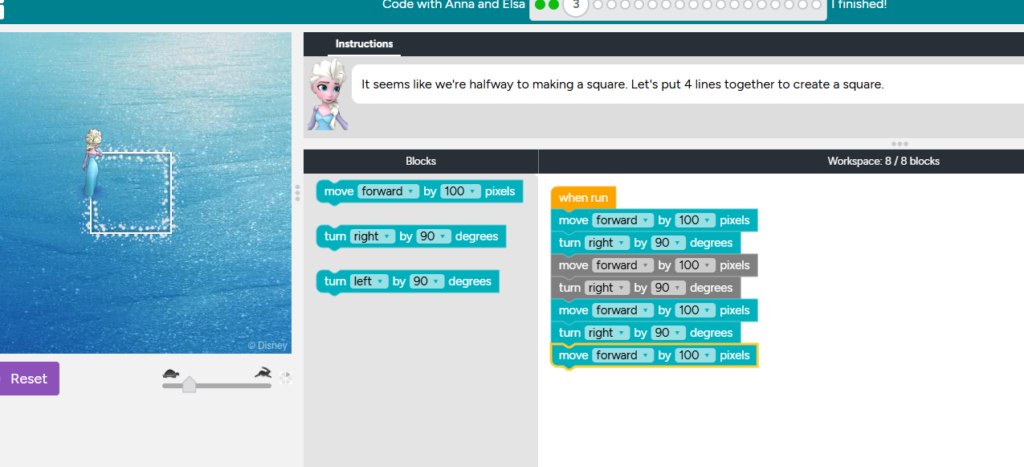
In-class, we explored some code-making using Studio Code’s “Code with Anna and Elsa” tutorial. I found the program relatively easy to use, with supportive instructional videos and prompts. In addition to stepwise instruction, the program also provides correctional prompts and informs the user if they have performed the task correctly – similar to what a teacher’s role would be when a student is learning a task. I could see this program being exceptionally useful at a middle school (or perhaps even Elementary) level to introduce computer skills, coding, and digital literacy. It includes well-known characters that kids would engage well with, and also is accessible to learners by way of written instruction, verbal instruction, and chunked material that is easy to work through at your own pace. Overall – useful tool for computer specific classes at a junior level, or beginner computer science or math classes at a secondary level. In the context of my subject areas, I would find this hard to authentically incorporate at a secondary level in classes that were not computer science or math specific, as this program specifically does not engage with science, English or French content. However, I do see clear applications for junior math classes, as it encourages development of BC Curriculum Competencies of critical thinking, decision making, and communication.
Below is a screenshot of a code example I completed in class today.
Gaming
For subjects like science and math, the use of gameplay could offer a significant outlet for engagement and interest for some students. Traditional delivery of science and math content often feels complex and overwhelming, often delivered using classical modes of note-taking and unit tests. Although I do believe that both test-writing and note-taking are valuable skills for our students to develop, I think the use of gameplay could alleviate the stress that often coincides with math and science classes. Games could be incorporated into the classroom as a daily 10min activity, offering a break and an outlet for students who are feeling overwhelmed by the content. Many of these educational games still promote development of core competencies such as decision making, communication, and collaboration, as outlined by the BC Curriculum for all subjects, and should therefore remain a valuable tool for any classroom. Math and science centered games or simulations, such as those published by Legends of Learning, PhET, and Gizmos can be used to support teaching of content by providing interactive visuals through which students can obtain knowledge from.
Exploring these resources today helped me gain some perspective concerning how gameplay and coding could be incorporated into my future classroom for mathematics (coding), science (gaming and simulations) or a mini digital literacy unit (both)! Something I would be highly considerate of as I incorporate more digital content into my classes, is students’ screen time. Despite digital games being exceptionally valuable tools, I find myself often reaching for hands-on, interactive learning amongst peers such as board games for math, labs for science, and skits or whole classroom games for language. All in all, I believe a balance of both styles of learning are equally important for well rounded student development.